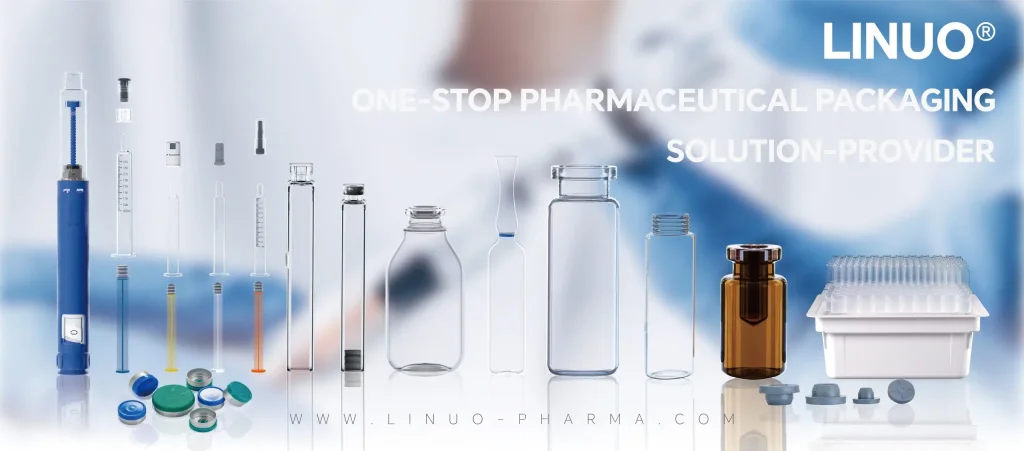
The successful delivery of a vaccine relies on a chain of stability, where every component must perform flawlessly. Selecting the correct primary container is a decisive step in this process, directly impacting fill-line efficiency, product integrity, and shelf life. Two principal formats exist within the domain of the pharma glass bottle: molded vials and tubing vials, the latter often supplied as RTU vials (Ready-to-Use). At LINUO, we provide both solutions, understanding that the optimal choice is not universal but specific to the vaccine’s profile and production logistics. This examination outlines the distinctions to inform your packaging strategy.

Fundamental Manufacturing Processes
The core difference begins with how each container is formed. Molded vials are created by pressing molten glass into a precision mold, a method that allows for consistent shaping of thicker glass walls and specific geometries, such as those required for large-volume containers. Tubing vials, from which RTU vials are predominantly produced, are made from glass tubes that are heated and shaped, resulting in containers with very uniform wall thickness and excellent optical clarity. As a pharmaceutical glass bottles manufacturer, we employ both techniques, recognizing that the forming process sets the foundation for the container’s physical characteristics and potential applications in sensitive vaccine packaging.
Comparing Critical Performance Characteristics
Each format brings a distinct set of attributes to the fill line. Molded vials are generally associated with high mechanical strength due to their thicker walls, which can be advantageous for certain handling and transportation environments. Tubing vials, celebrated for their superior dimensional consistency and smoother interior surfaces, often contribute to more reliable performance in high-speed filling and stoppering processes. This consistency is a key reason why the industry frequently selects processed tubing vials as premium RTU vials. The choice between a molded pharma glass bottle and a tubing vial often comes down to prioritizing specific mechanical or processing benefits aligned with the vaccine’s viscosity, fill volume, and assembly line setup.
Alignment with Vaccine-Specific Requirements
The decision matrix becomes clearer when evaluated against vaccine-specific needs. For standard-volume lyophilized (freeze-dried) vaccines or liquid formulations, the exceptional cleanliness, consistency, and compatibility with automated inspection systems make tubing-based RTU vials a frequent choice. Their Ready-to-Use nature eliminates in-house washing and sterilization, reducing preparation steps and contamination risks. Conversely, a molded pharma glass bottle might be indicated for vaccines requiring unusual dimensional specifications, very large volumes, or where particular structural resilience is prioritized. A proficient pharmaceutical glass bottles manufacturer like LINUO can guide partners through these considerations, ensuring the selected format aligns with both the product’s science and production reality.
There is no single answer to the question of molded versus tubing vials for vaccine packaging. Each format serves a valid purpose within the ecosystem of vaccine development and commercialization. The decision must weigh manufacturing methodology, performance under production conditions, and the precise demands of the vaccine formulation itself. By understanding these fundamental differences, developers can engage in more targeted discussions with their packaging partners. At LINUO, our role as a comprehensive pharmaceutical glass bottles manufacturer is to provide clarity and supply both molded and tubing-based RTU vials, ensuring you have access to the specific pharma glass bottle technology that your vaccine requires for safe and effective delivery.